


Unlock the Power of AI to Measure Burberry’s Brand Perception
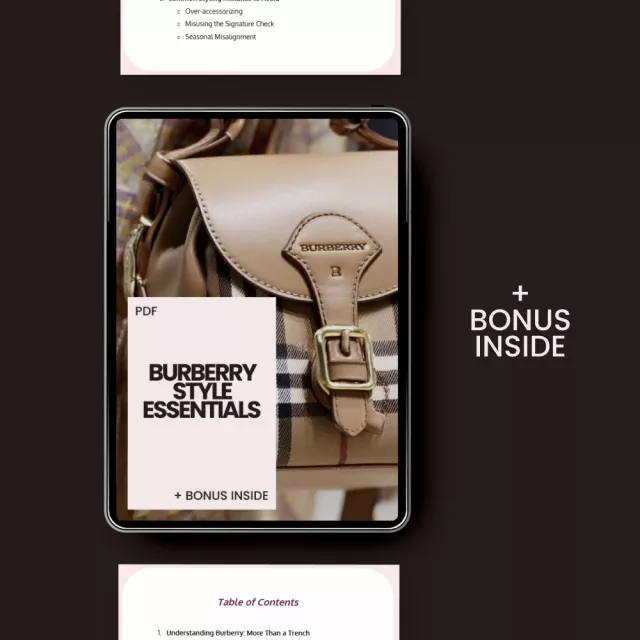
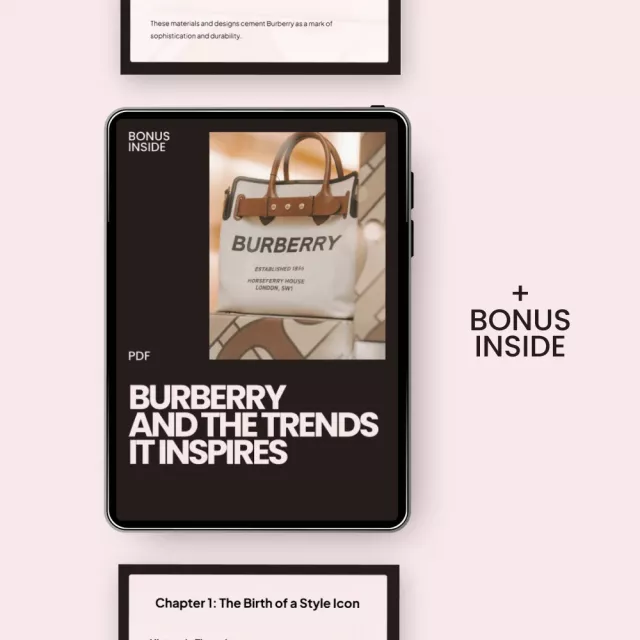
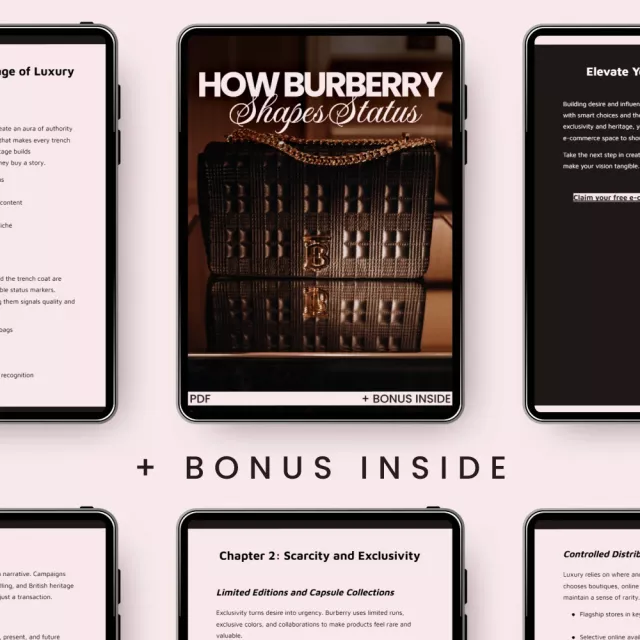
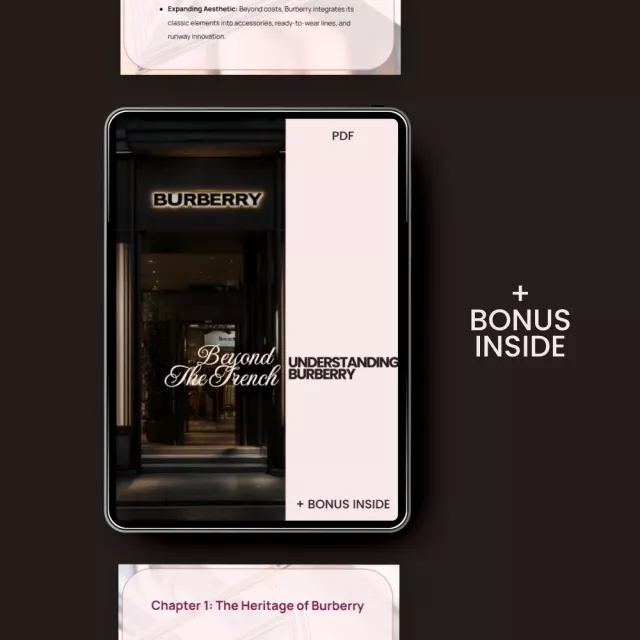
Take your brand analysis to the next level with the Burberry Brand Perception Checklist. This practical guide helps you leverage AI to assess Burberry’s position in the luxury fashion market. Whether you’re evaluating public sentiment, identifying trends, or gauging how the world views the iconic trench coat, this digital download is your go-to resource for understanding and improving Burberry’s brand image.
Designed for fashion marketers, strategists, and brand managers, this checklist provides a clear, structured approach to AI-powered brand analysis. You’ll learn how to refine your AI search process to capture the essence of Burberry’s perception across social media platforms, fashion blogs, and more.
Product Features:
- Define Your Goal: Establish your objective, whether it’s measuring public sentiment or identifying luxury positioning.
- Pick the Right AI Tool: Select the best platform for analyzing text, images, and social media mentions.
- Identify Keywords & Phrases: Optimize AI searches with targeted keywords like “Burberry,” “luxury fashion,” “trench coat,” and “elegant.”
- Map Platforms & Sources: Target Instagram, TikTok, YouTube, and niche forums for diverse insights.
- Set Time Frames: Track sentiment fluctuations around campaigns, product drops, and runway shows.
- Analyze Visual Mentions: Use AI image recognition to detect Burberry logos and patterns across the web.
- Track Sentiment & Emotion: Understand how people feel about Burberry, whether positive, negative, or neutral.
- Spot Emerging Trends: Recognize the latest buzz and growing discussions about Burberry.
- Summarize & Visualize: Transform your findings into easy-to-understand charts and heatmaps.
- Recommend Actionable Moves: Get actionable insights to refine campaigns and product launches.
- Repeat & Refine: Continuously improve your analysis for ongoing success.
Why Choose This Checklist?
This Burberry Brand Perception Checklist is more than just a traditional guide—it’s a comprehensive framework that helps you gain actionable insights into Burberry’s brand presence and perception. What makes this resource stand out? Unlike other tools that only provide vague advice, this checklist combines the power of AI with practical steps to dive deep into sentiment analysis, trend spotting, and image recognition. It’s tailored specifically for those who want to understand Burberry’s unique position in the world of luxury fashion.
Who Is This For?
If you’re a marketing professional, brand strategist, or fashion enthusiast looking to decode Burberry’s brand perception, this checklist is for you. Whether you’re tracking how Burberry’s luxury brand is received across social media or discovering which emotions dominate conversations about their trench coat, this guide provides clear, practical steps for success.
Start Your Brand Perception Journey Today
Don’t miss out on the opportunity to unlock valuable insights about Burberry’s brand perception. Download the Burberry Brand Perception Checklist today and start using AI-powered analysis to refine your strategy and make data-driven decisions. Whether you’re analyzing sentiment, spotting emerging trends, or refining your luxury fashion campaigns, this checklist will guide your every step.
Ready to get started? Download now and stay ahead of the curve in understanding Burberry’s luxury positioning.
SHIPPING
We are proud to offer international shipping services that currently operate in over 200 countries and islands world wide. Nothing means more to us than bringing our customers great value and service. We will continue to grow to meet the needs of all our customers, delivering a service beyond all expectation anywhere in the world.
Do you ship worldwide?
Yes. We provide free shipping to over 200 countries around the world. However, there are some locations we are unable to ship to. If you happen to be located in one of those countries we will contact you.
What about customs?
We are not responsible for any custom fees once the items have been shipped. By purchasing our products, you consent that one or more packages may be shipped to you and may get custom fees when they arrive to your country.
How long does shipping take?
Shipping time varies by location. These are our estimates:| Location | *Estimated Shipping Time |
|---|---|
| United States | 5-20 Business days |
| Canada, Europe | 5-20 Business days |
| Australia, New Zealand | 5-20 Business days |
| Central & South America | 5-25 Business days |
| Asia | 5-20 Business days |
| Africa | 5-25 Business days |
Do you provide tracking information?
Yes, you will receive an email once your order ships that contains your tracking information. If you haven’t received tracking info within 5 days, please contact us.
My tracking says “no information available at the moment”.
For some shipping companies, it takes 2-5 business days for the tracking information to update on the system. If your order was placed more than 5 business days ago and there is still no information on your tracking number, please contact us.
Will my items be sent in one package?
For logistical reasons, items in the same purchase will sometimes be sent in separate packages, even if you've specified combined shipping.
If you have any other questions, please contact us and we will do our best to help you out.
RETURNS
Order cancellation
All orders can be cancelled until they are shipped. If your order has been paid and you need to make a change or cancel an order, you must contact us within 12 hours. Once the packaging and shipping process has started, it can no longer be cancelled.
Refunds
Your satisfaction is our #1 priority. Therefore, you can request a refund or reshipment for ordered products if:
- If you did not receive the product within the guaranteed time (45 days not including 1-3 day processing) you can request a refund or a reshipment.
- If you received the wrong item you can request a refund or a reshipment.
- If you do not want the product you’ve received you may request a refund but you must return the item at your expense and the item must be unused.
We do not issue the refund if:
- Your order did not arrive due to factors within your control (i.e. providing the wrong shipping address)
- Your order did not arrive due to exceptional circumstances outside the control of cresteri.com (i.e. not cleared by customs, delayed by a natural disaster).
- Other exceptional circumstances outside the control of cresteri.com.
*You can submit refund requests within 15 days after the guaranteed period for delivery (45 days) has expired. You can do it by sending a message on Contact Us page
If you are approved for a refund, then your refund will be processed, and a credit will automatically be applied to your credit card or original method of payment, within 14 days.
Exchanges
If for any reason you would like to exchange your product, perhaps for a different size in clothing, you must contact us first and we will guide you through the steps.
Please do not send your purchase back to us unless we authorise you to do so.
Order cancellation
All orders can be cancelled until they are shipped. If your order has been paid and you need to make a change or cancel an order, you must contact us within 12 hours. Once the packaging and shipping process has started, it can no longer be cancelled.
Refunds
Your satisfaction is our #1 priority. Therefore, you can request a refund or reshipment for ordered products if:
- If you did not receive the product within the guaranteed time( 45 days not including 2-5 day processing) you can request a refund or a reshipment.
- If you received the wrong item you can request a refund or a reshipment.
- If you do not want the product you’ve received you may request a refund but you must return the item at your expense and the item must be unused.
We do not issue the refund if:
- Your order did not arrive due to factors within your control (i.e. providing the wrong shipping address)
- Your order did not arrive due to exceptional circumstances outside the control of cresteri.com (i.e. not cleared by customs, delayed by a natural disaster).
- Other exceptional circumstances outside the control of https://cresteri.com
*You can submit refund requests within 15 days after the guaranteed period for delivery (45 days) has expired. You can do it by sending a message on Contact Us page
If you are approved for a refund, then your refund will be processed, and a credit will automatically be applied to your credit card or original method of payment, within 14 days.
Exchanges
If for any reason you would like to exchange your product, perhaps for a different size in clothing. You must contact us first and we will guide you through the steps.
Please do not send your purchase back to us unless we authorise you to do so.
Customer Reviews
Write a Review
We Think You’ll Love
Top picks just for you















The keyword strategy section goes way beyond just product names — tracking emotional terms like "exclusive" and "overpriced" was a perspective shift for how I approach sentiment analysis.
Exactly the framework I needed for my quarterly brand audit.
I manage social listening for a mid-size fashion brand and this checklist reorganized my entire workflow. The step about separating user opinion from influencer posts from press coverage sounds obvious, but I wasn't doing it systematically. Once I built that filter into our sentiment dashboard, the data became so much cleaner. Our creative director actually started trusting the reports because the noise was gone. The visual mentions piece using image recognition was new territory for us and opened up a whole layer of brand tracking we'd been missing.
Clean checklist format that doesn't waste your time with theory.
The tip about tracking sentiment spikes around runway shows helped me time a client report perfectly — we caught a negative shift within 48 hours of a campaign launch and flagged it before it snowballed. Really practical stuff.
Solid starting point, though I wish it went deeper into which specific AI tools work best for image recognition versus text sentiment. The steps are clear but tool selection felt vague for someone trying to actually implement this tomorrow.
Printed this out and pinned it next to my monitor
I've been doing brand perception work for about eight years, mostly for heritage luxury houses. What impressed me about this guide is how tightly it connects each analysis step to an actionable recommendation. Most frameworks I've seen stop at "here's what people think" — this one pushes you to link findings directly to campaign adjustments. I tested the approach on a competitor analysis project last quarter and the client loved that every insight came with a clear next move backed by data. The repeat-and-refine loop at the end is exactly right too. Perception isn't a snapshot, it's a living thing, and treating it like an ongoing process instead of a one-off report changed how our team structures retainers. Even the hashtag clustering suggestion surfaced patterns we wouldn't have caught manually.
Mapping platforms beyond the obvious ones was a wake-up call for our team.
Useful framework but some steps feel more like common sense for anyone already working in brand strategy. The niche forums point was genuinely insightful though — we found perception data on a regional fashion site that contradicted everything we saw on Instagram.
The time frame comparison approach — current vs historical — gave me a way to finally quantify what I'd only been sensing intuitively about shifts in brand perception. Shared it with my whole marketing team.
✨
Short and dense in the best way possible.
Applied the sentiment classification method to a different luxury brand and it worked just as well — the framework is transferable.
Good overview, but I expected more on how to actually build the visualization outputs — charts, heatmaps, word clouds are mentioned but not demonstrated. Would be stronger with even one worked example showing raw data turned into a deliverable.
The emphasis on emotional keywords alongside product terms is what sets this apart from generic brand tracking guides.
I run a small consultancy focused on luxury brand positioning and this checklist became our intake template for new clients. Before reading it, our perception audits were scattered — we'd pull social data without clear goals, mix influencer content with organic mentions, and deliver reports that felt comprehensive but weren't actionable. The goal-definition step at the top forced us to get specific before touching any data. The platform mapping expanded our scope to regional fashion blogs we'd been ignoring. One client in particular saw us catch a perception gap on a niche European forum that their in-house team had completely missed. We restructured our entire service offering around this loop. The only thing I'd add is more guidance on presenting findings to non-technical stakeholders, but that's a minor gap in an otherwise excellent resource
Finally a perception guide that treats the analysis as a loop, not a one-time project.
Decent for beginners. If you've used any social listening platform before, most of this will feel familiar. The emotional keyword angle and the visual mention tracking were the two pieces that added something new for me.
Used the filtering method to separate organic mentions from paid influencer content and the sentiment scores shifted dramatically — turns out our brand health was weaker than the blended data suggested. That single insight justified the read.
Concise, structured, immediately usable — rare combination.
The image recognition step for tracking where Burberry patterns appear online is brilliant and something I hadn't considered applying to our brand
Helpful but would benefit from case studies showing real before-and-after perception shifts. The steps are logical but abstract without concrete numbers or timelines to anchor expectations.
Taped the checklist inside my notebook — it's my pre-flight for every brand report now.
⭐