


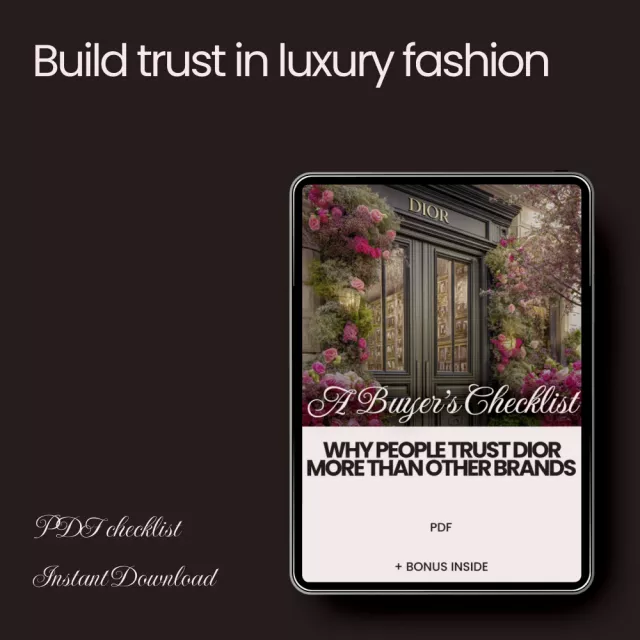
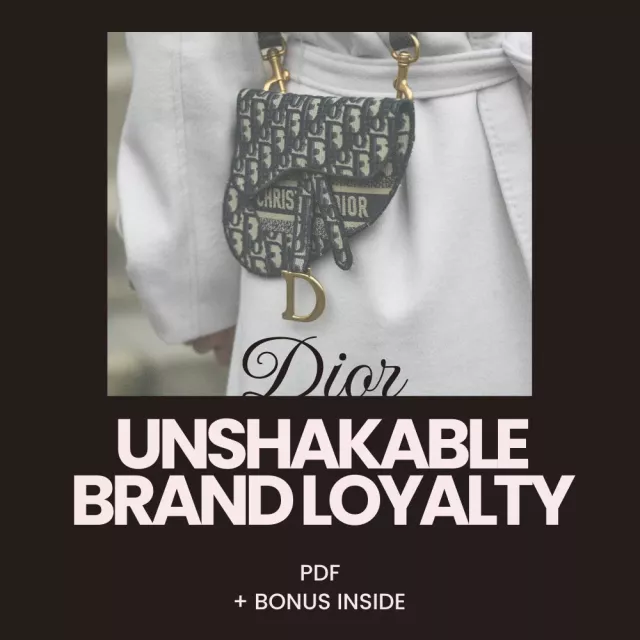
Unlock the Secrets Behind Dior’s Enduring Trustworthiness
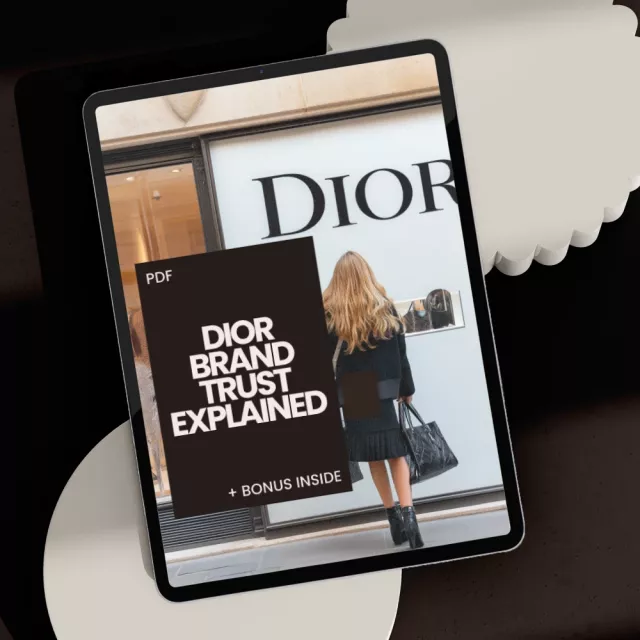
Ever wondered why Dior is a brand that commands trust and admiration worldwide? Whether you’re a fashion buyer, a luxury enthusiast, or simply someone who appreciates impeccable style, understanding the reasons behind Dior’s reputation is essential. Our Why People Trust Dior More Than Other Brands checklist provides a deep dive into the key factors that make Dior stand out in the fashion world. From its timeless heritage to its innovation with tradition, this guide helps you make informed choices when buying luxury goods.
This digital download is perfect for anyone who wants to gain a deeper understanding of what makes Dior such a reliable and respected brand. You’ll get a concise checklist that outlines the key elements that inspire trust in Dior, along with practical tips to apply to your own fashion buying decisions. Whether you’re new to the world of luxury fashion or an experienced collector, this guide will serve as your ultimate reference.
What’s Inside the Checklist?
- Heritage & Legacy: Discover how Dior’s rich history dating back to 1946 continues to build its credibility.
- Quality Craftsmanship: Learn how Dior’s attention to detail and use of premium materials set it apart.
- Celebrity & Influencer Endorsements: See how Dior’s partnerships with high-profile figures boost its appeal.
- Innovation with Tradition: Understand how Dior evolves with the times without losing its timeless elegance.
- Transparent Brand Story: Learn why Dior’s open communication about its values builds consumer trust.
- Customer Experience: Find out how Dior’s focus on exceptional customer service strengthens its reputation.
Why Choose This Guide?
Our Why People Trust Dior More Than Other Brands checklist is not just another fashion guide—it’s a comprehensive resource designed to help you build trust in your fashion choices. It’s carefully curated to highlight the most important elements that contribute to Dior’s reputation for excellence. This guide is for anyone looking to make smarter fashion purchases and invest in trusted, high-quality brands.
What sets this checklist apart from others is its focus on the practical aspects of Dior’s trustworthiness. It goes beyond theory to provide you with actionable insights you can use when shopping for luxury fashion items. This is more than just a general overview; it’s a tool for savvy buyers who want to make confident and informed decisions every time they invest in high-end fashion.
Take Action Now!
Don’t miss out on this opportunity to elevate your fashion knowledge. Download the Why People Trust Dior More Than Other Brands checklist now and start making smarter, more informed choices today! Trust in Dior and trust in yourself.
SHIPPING
We are proud to offer international shipping services that currently operate in over 200 countries and islands world wide. Nothing means more to us than bringing our customers great value and service. We will continue to grow to meet the needs of all our customers, delivering a service beyond all expectation anywhere in the world.
Do you ship worldwide?
Yes. We provide free shipping to over 200 countries around the world. However, there are some locations we are unable to ship to. If you happen to be located in one of those countries we will contact you.
What about customs?
We are not responsible for any custom fees once the items have been shipped. By purchasing our products, you consent that one or more packages may be shipped to you and may get custom fees when they arrive to your country.
How long does shipping take?
Shipping time varies by location. These are our estimates:| Location | *Estimated Shipping Time |
|---|---|
| United States | 5-20 Business days |
| Canada, Europe | 5-20 Business days |
| Australia, New Zealand | 5-20 Business days |
| Central & South America | 5-25 Business days |
| Asia | 5-20 Business days |
| Africa | 5-25 Business days |
Do you provide tracking information?
Yes, you will receive an email once your order ships that contains your tracking information. If you haven’t received tracking info within 5 days, please contact us.
My tracking says “no information available at the moment”.
For some shipping companies, it takes 2-5 business days for the tracking information to update on the system. If your order was placed more than 5 business days ago and there is still no information on your tracking number, please contact us.
Will my items be sent in one package?
For logistical reasons, items in the same purchase will sometimes be sent in separate packages, even if you've specified combined shipping.
If you have any other questions, please contact us and we will do our best to help you out.
RETURNS
Order cancellation
All orders can be cancelled until they are shipped. If your order has been paid and you need to make a change or cancel an order, you must contact us within 12 hours. Once the packaging and shipping process has started, it can no longer be cancelled.
Refunds
Your satisfaction is our #1 priority. Therefore, you can request a refund or reshipment for ordered products if:
- If you did not receive the product within the guaranteed time (45 days not including 1-3 day processing) you can request a refund or a reshipment.
- If you received the wrong item you can request a refund or a reshipment.
- If you do not want the product you’ve received you may request a refund but you must return the item at your expense and the item must be unused.
We do not issue the refund if:
- Your order did not arrive due to factors within your control (i.e. providing the wrong shipping address)
- Your order did not arrive due to exceptional circumstances outside the control of cresteri.com (i.e. not cleared by customs, delayed by a natural disaster).
- Other exceptional circumstances outside the control of cresteri.com.
*You can submit refund requests within 15 days after the guaranteed period for delivery (45 days) has expired. You can do it by sending a message on Contact Us page
If you are approved for a refund, then your refund will be processed, and a credit will automatically be applied to your credit card or original method of payment, within 14 days.
Exchanges
If for any reason you would like to exchange your product, perhaps for a different size in clothing, you must contact us first and we will guide you through the steps.
Please do not send your purchase back to us unless we authorise you to do so.
Order cancellation
All orders can be cancelled until they are shipped. If your order has been paid and you need to make a change or cancel an order, you must contact us within 12 hours. Once the packaging and shipping process has started, it can no longer be cancelled.
Refunds
Your satisfaction is our #1 priority. Therefore, you can request a refund or reshipment for ordered products if:
- If you did not receive the product within the guaranteed time( 45 days not including 2-5 day processing) you can request a refund or a reshipment.
- If you received the wrong item you can request a refund or a reshipment.
- If you do not want the product you’ve received you may request a refund but you must return the item at your expense and the item must be unused.
We do not issue the refund if:
- Your order did not arrive due to factors within your control (i.e. providing the wrong shipping address)
- Your order did not arrive due to exceptional circumstances outside the control of cresteri.com (i.e. not cleared by customs, delayed by a natural disaster).
- Other exceptional circumstances outside the control of https://cresteri.com
*You can submit refund requests within 15 days after the guaranteed period for delivery (45 days) has expired. You can do it by sending a message on Contact Us page
If you are approved for a refund, then your refund will be processed, and a credit will automatically be applied to your credit card or original method of payment, within 14 days.
Exchanges
If for any reason you would like to exchange your product, perhaps for a different size in clothing. You must contact us first and we will guide you through the steps.
Please do not send your purchase back to us unless we authorise you to do so.
Customer Reviews
Write a Review
We Think You’ll Love
Top picks just for you










Experienced luxury buyers will find this covers familiar ground — the structure is right but the depth is limited. Including customer experience as a trust criterion alongside heritage and craftsmanship is the correct call. Each criterion is introduced and concluded with a brief prompt, which leaves the harder questions unexplored rather than answered.
What makes this checklist work as a buyer tool is how it moves from macro to micro — starting with the broad historical picture of heritage and legacy, narrowing through craftsmanship and endorsements, and ending at the immediate, tactile level of how a brand treats you on the day you interact with it. Criterion six is the one most buyers skip because it's hardest to research in advance, but the checklist is right to include it. A brand can score perfectly on heritage, craftsmanship, and even storytelling, and still fail you through indifferent service. Using all six together gives you a picture that no single criterion could provide alone. Running Dior through the full framework isn't just about validating why Dior earns trust — it reveals what trustworthiness in luxury actually requires.
Packaging as a quality signal, not decoration — the checklist identifies what most buyers overlook.
Celebrity endorsements as a trust mechanism only work when the relationship is sustained, and the checklist makes exactly that distinction. One-off promotions tell you a brand has a budget; long-term ambassadors tell you the brand has a value system worth representing over time ✨ Dior's consistent use of the same icons across years is a textbook demonstration of criterion three.
Practically, the checklist functions well as a pre-purchase framework for evaluating any luxury brand, not just Dior. The active questions embedded in each criterion — the 'ask yourself' and 'check if' prompts — are the most actionable elements. The guide is slightly thin on what to do when a brand performs well on some criteria but poorly on others, which is the most common real-world situation a buyer faces.
No six-point checklist I've seen explains brand trust better, faster, or more accurately.
Holding all six criteria simultaneously, for decades, is what separates real trust from reputation.
I shared this checklist with a friend who was about to spend significantly on an up-and-coming luxury label she'd discovered through social media. When we ran it through the six criteria together, it scored reasonably on innovation and customer experience but struggled badly on heritage and craftsmanship consistency — the brand was four years old with no established track record. It relied entirely on influencer partnerships with no long-term ambassadors, and had very little transparency about where its materials came from This wasn't conclusive evidence against buying from them, but it reframed the decision as a calculated risk rather than a validated trust. She waited, found more information, and ultimately bought from a brand with a stronger heritage profile. The checklist doesn't tell you what to buy — it tells you what you're actually buying.
Clear, concise, and structured well for buyers who feel overwhelmed by luxury marketing. The heritage and craftsmanship sections are the strongest. I'd give five stars if criterion five went further — transparent brand story is arguably the most important trust signal in today's luxury market, but the checklist addresses it in fewer words than it deserves given how difficult that transparency is to verify in practice.
Quality that extends from stitching to packaging is the real meaning of luxury craftsmanship.
Placing sustained customer experience above brand reputation as the primary trust criterion is the kind of reorientation that sounds obvious until you realize you've been doing the opposite for years. Evaluating a brand based on how it has consistently treated customers — not just how it presents itself in campaigns — is what separates informed luxury buying from expensive guessing.
️✨
The transparent brand story criterion is well-positioned at number five — by the time you've assessed heritage, craftsmanship, and endorsements, you've built enough context to evaluate whether a brand's storytelling holds up against evidence. The prompt to check how clearly a brand communicates about materials and sourcing is the most under-used buyer question in luxury fashion. Knocking one star off because the checklist format inevitably compresses nuance on some of the harder criteria.
Using the New Look as a heritage reference point makes this checklist immediately credible.
What I appreciate about the customer experience criterion is how it positions luxury packaging not as brand theater but as evidence of quality culture If the packaging is inconsistent with the price, the promise doesn't hold up — and this checklist is one of the few that names that openly. Every touchpoint either confirms or contradicts what the brand says about itself.
Criteria five and six combined reveal the brand integrity picture most buyers ignore.
The six-point checklist covers the right territory and the questions embedded in each section are well-phrased for buyers who are newer to evaluating luxury fashion. Heritage and legacy, craftsmanship, celebrity partnerships, innovation, storytelling, and customer experience are genuinely the right categories. That said, reading this as someone who has spent years in luxury retail, the checklist functions more as an introduction to the thinking than as a rigorous evaluation tool. Criterion two on quality craftsmanship tells you to check for consistent quality across collections, but doesn't tell you how — what physical or documented signals should you look for if you're buying online and can't handle the product? Criterion five on transparent brand story is perhaps the most important of the six in today's market, where sustainability and supply chain transparency are increasingly central to trust, but the checklist addresses it in three bullet points and doesn't point toward any verification resources. Criterion four on innovation with tradition sets up an important idea but gives you only a one-line prompt to consider whether a brand evolves without compromising its values — which is perhaps the hardest question in luxury evaluation and deserves much more unpacking. As an orientation document for new luxury buyers, this is useful and well-structured. As a buying tool for anyone already familiar with these brands, it runs out of depth quickly.
A buyer's checklist that actually respects the buyer's intelligence — rare and appreciated.
When you apply all six criteria simultaneously to one brand, the exercise forces honesty about where enthusiasm is outrunning evidence. Criterion three — long-term ambassadors over one-off promotions — is the filter that eliminates the most noise from luxury marketing. A brand can buy a celebrity for a season; earning sustained representation requires being worth it for years.
Does the brand evolve without compromising its core values — the hardest question here.
The checklist's strength is in its completeness — very few buyer frameworks capture all six of these dimensions, and fewer still tie them explicitly to trust rather than just quality or value. The slight weakness is in criterion three, where the distinction between genuine ambassadors and transactional ones is real and important, but the checklist doesn't give you much help in discerning the difference from the outside. Still the most practical trust-evaluation tool for luxury buying I've encountered in a free format.
Stitching to packaging — criterion two identifies where the gap between luxury and premium lives.
What this checklist does better than most brand trust frameworks is tie each criterion to a specific buyer action. It's not just 'check for quality' — it's 'check for consistent quality across collections before trusting any luxury label.' The distinction between a principle and an actionable question is what makes this usable rather than aspirational. The heritage criterion's framing of Dior's 1946 founding as context for evaluating any brand's track record gives buyers a concrete benchmark. The customer experience criterion's separation of in-store and online touchpoints matters because a brand that performs beautifully in a boutique but falters digitally is operating two different service standards, and that inconsistency is itself a trust signal. This checklist is worth keeping as a reference document for every significant luxury purchase.
Experience builds luxury trust; reputation merely starts it — this checklist knows the difference.
The structure is clean and the active prompts in each section keep the evaluation from becoming passive. Criteria one and six bracket the checklist well — heritage as the foundation and customer experience as the proof. My only note is that criterion four on innovation with tradition could be more specific about what 'compromising core values' looks like in practice, since that line is genuinely blurry in real time.